Why Is My Electric Bill So High With a Mini Split System? Common Causes and Fixes
Mini splits are sold as energy savers. So why is your electric bill going up instead of down? According to the U.S. Department of Energy, ductless systems can be up to 30% more efficient than central forced-air systems — but only when they are sized and installed correctly. At Westminster HVAC, we are a licensed HVAC contractor serving Westminster, CO, and we see this problem on calls more than most people expect. The good news: most causes have a clear fix. This guide covers why your electric bill is so high with a mini split system and what you can do about it — from a quick filter clean to knowing when it is time to call us.
We will walk through sizing, dirty filters, thermostat settings, refrigerant issues, installation mistakes, and home habits. By the end, you will know whether this is something you can handle today or a job for a Westminster HVAC technician.
Your Mini Split Might Be the Wrong Size for the Space
Secondary Keyword: mini split wrong size electricity bill
Size is the most common root cause of high mini split bills — and no amount of DIY maintenance will fix it.
A unit that is too small runs non-stop trying to hit your set temperature. It never fully gets there, and the compressor just keeps working. That continuous run cycle is what shows up on your bill at the end of the month.
A unit that is too large has a different problem. It short-cycles — it hits the set temperature too fast, shuts off, then kicks back on again before the room stabilizes. Short cycling wastes energy and means the system never runs long enough to pull humidity out of the air. So your space feels clammy even when the temperature looks right.
Proper sizing depends on room square footage, ceiling height, insulation quality, sun exposure, and window area. The industry-standard method is a Manual J load calculation, developed by the Air Conditioning Contractors of America (ACCA). This is not a rough estimate — it is a calculation done for your specific space.
| Room Size (Sq Ft) | Recommended BTU Range |
|---|---|
| Up to 150 | 5,000 - 6,000 BTU |
| 150 - 250 | 6,000 - 8,000 BTU |
| 250 - 350 | 8,000 - 10,000 BTU |
| 350 - 550 | 10,000 - 14,000 BTU |
| 550 - 700 | 14,000 - 18,000 BTU |
| 700 - 1,000 | 18,000 - 21,000 BTU |
| 1,000 - 1,400 | 21,000 - 24,000 BTU |
Getting sizing right at installation is the single best thing you can do for long-term efficiency. See ductless mini split installation Westminster to learn how we size systems for Westminster homes.
We walked into a call on the west side of Westminster where a 24,000 BTU unit had been installed in a 350-square-foot bedroom addition. The homeowner had been fighting a $180-a-month electric bill since the system went in. Once we right-sized the unit, the bill dropped to under $60 in the same season.
Now that you know what sizing means, let's look at something you can fix yourself right now — your air filter.
A Dirty Filter Is Costing You More Than You Think
Secondary Keyword: mini split dirty filter energy use
A clogged filter is one of the easiest problems to fix and one of the most ignored. During heavy use — summer cooling and winter heating — mini split filters should be cleaned every two to four weeks. Most homeowners do not know this. They clean it once in spring and forget about it until next year.
Here is what happens when the filter clogs: the blower motor has to work harder to pull air through the restriction. That extra work draws more electricity. And the longer the filter stays dirty, the worse it gets.
A dirty filter also reduces indoor air quality and can cause the evaporator coil to freeze over. A frozen coil means no cooling at all — and a bigger repair bill.
Filter Cleaning Steps:
- Turn the mini split off before removing the filter.
- Open the front panel of the indoor head unit.
- Slide the filter out — most units have one or two filters that pull straight out.
- Rinse the filter with warm water. Let it run until the water runs clear.
- Shake off excess water and let the filter dry completely before reinserting.
- Slide the filter back in, close the panel, and power the unit back on.
No tools needed. The whole process takes about ten minutes. But it adds up — regular filter maintenance is the easiest way to hold efficiency steady all year.
Check Your Thermostat Settings First
Secondary Keyword: mini split thermostat settings electricity cost
Before assuming something is broken, check your settings. A five-minute audit costs nothing and sometimes fixes the problem completely.
The fan mode matters more than most people realize. Running the fan on "continuous" or "high" all day uses far more energy than "auto" mode, which only runs the fan when the system is actively heating or cooling. And setting the temperature too low in summer — or too high in winter — forces the system into long, hard run cycles.
Most mini split remotes include an economy or energy-saver mode. According to ENERGY STAR data, these modes can cut consumption by 10 to 30% depending on the unit. But it only works when the mode is actually turned on.
Recommended Settings Cheat Sheet:
- Fan Mode: Auto (not continuous, not high)
- Cooling Set Point: 76–78°F for most comfort with lowest energy use
- Heating Set Point: 68–70°F
- Economy/Energy-Saver Mode: On during occupied hours
- Sleep Mode: On at night — reduces output gradually after you fall asleep
- Timer Function: Use it to stop heating or cooling empty rooms
So the settings alone can explain a big chunk of your bill. Check them before calling anyone.
Low Refrigerant or a Refrigerant Leak
Secondary Keyword: mini split running constantly high bill
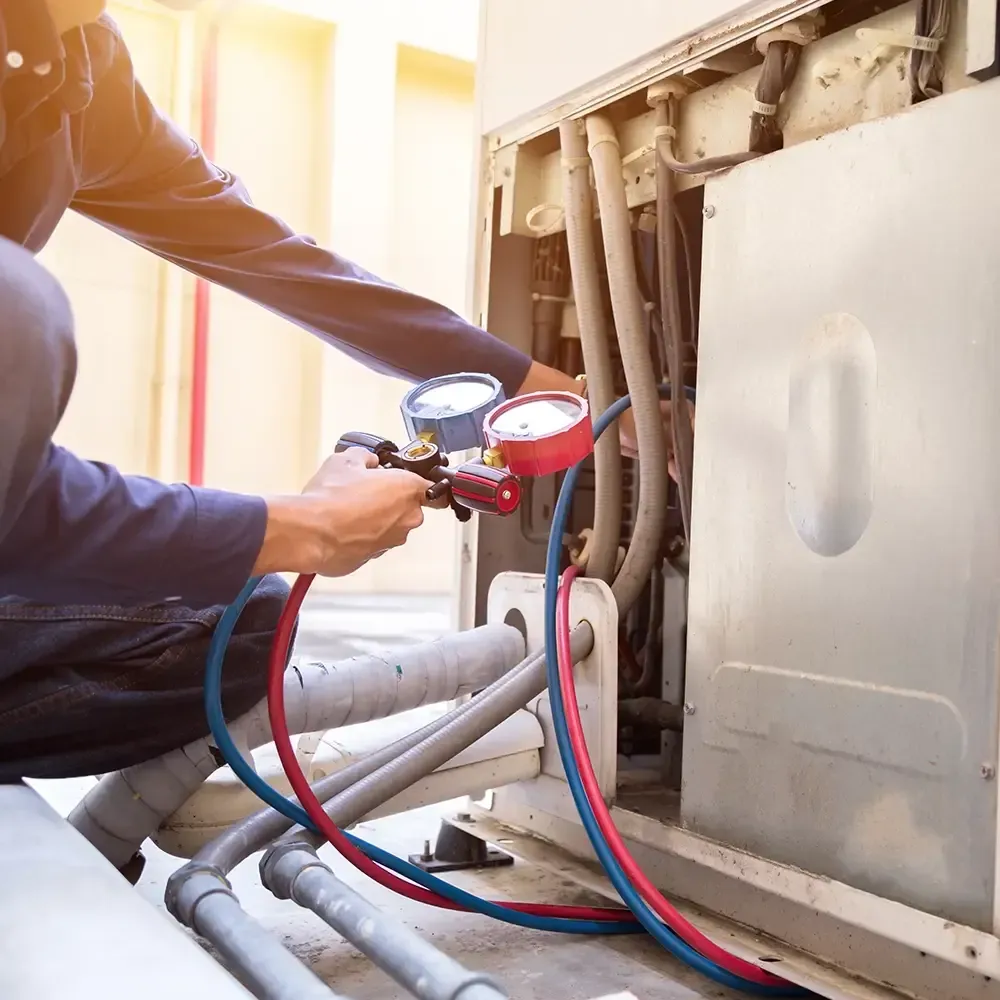
If the settings look right and the filter is clean, the problem may be inside the system. Low refrigerant is one of the more serious causes of a high electric bill — and one that homeowners cannot fix themselves.
When refrigerant is low, the compressor works longer and harder to move heat. The system runs more cycles to reach the same result. That extra compressor time shows up directly on your bill.
And here is something important: refrigerant does not wear out or get used up over time. If your refrigerant level is low, there is a leak somewhere. The system did not just run low — something is wrong.
Warning Signs of Low Refrigerant:
- Ice forming on the outdoor unit or on the refrigerant lines
- Warm air blowing from the indoor head even when set to cool
- The system runs in long, constant cycles and never quite hits the set temperature
- Higher electric bill with no change in usage habits
Refrigerant handling requires an EPA Section 608 certification. This is not a DIY repair — and attempting it without certification is illegal. A refrigerant check and recharge is a standard service call. Contact us about Westminster ductless mini split installation and service if you are seeing any of these signs.
On one Westminster service call, we found a slow leak at a flare fitting on a three-year-old system. The homeowner had noticed the bill creeping up for two straight summers. Once we located the leak, repaired the fitting, and recharged the system, the unit ran normally and the bill dropped back to where it had been when the system was new.
If cleaning the filter and adjusting the settings did not lower your bill, the problem may be inside the system itself.
Does Brand Matter If the Installation Is Poor?
Secondary Keyword: ductless mini split efficiency problems
A mini split can be a quality unit from a top brand and still run inefficiently — if it was not installed correctly. Installation quality is one of the most overlooked causes of high energy bills, and it is almost impossible to diagnose without a trained eye.
| Installation Done Right | Common Installation Mistakes |
|---|---|
| Line set length matched to manufacturer spec | Line set too long, adding compressor strain |
| Correct line set diameter for the unit | Wrong diameter causes refrigerant flow issues |
| Indoor head mounted at the right height with clear airflow | Head mounted too high or blocked by ceiling beams |
| Line set penetrations fully sealed | Gaps in the wall where conditioned air escapes |
| Wiring sized and run per electrical code | Undersized wiring causing voltage drops and compressor stress |
| Outdoor unit positioned for proper airflow and drainage | Unit blocked by shrubs, fencing, or low clearance |
Wiring mistakes are especially damaging. Voltage irregularities from undersized or improperly run wiring can stress the compressor over time — shortening its life and raising your bill along the way.
The good news is that most of these problems are avoidable with the right installation from the start. See professional ductless mini split installation Westminster CO to learn how we do it.
Usage Habits and Home Conditions That Raise the Bill
Secondary Keyword: mini split high energy consumption
Sometimes the system is fine. The issue is what is happening around it.
Leaving doors or windows open while the mini split runs forces it to condition air it can never actually keep. It runs longer. It works harder. Your bill goes up.
But the bigger factor in Westminster is the home itself. A lot of older homes in Westminster — especially those built before 1990 — have attic and wall insulation that does not meet current standards. When the insulation is thin, heat transfers through the walls and ceiling faster than any mini split can offset. The system is not broken. It is just fighting a building that is working against it.
The Front Range climate adds its own challenge. Westminster sits at around 5,400 feet, and the semi-arid climate means dramatic swings between daytime and nighttime temperatures — sometimes 30 to 40 degrees in a single day during summer. A system that handles the afternoon load easily can run long cycles in the early evening trying to recover. What homeowners don't realize is that this is not a system failure — it is the climate, and the fix is often improving insulation or window sealing rather than replacing the unit.
Habits to Change Today:
- Keep doors and windows closed while the mini split is running
- Check window weatherstripping — gaps let conditioned air out fast
- Pull blinds or shades on west-facing windows during afternoon peak heat
- Avoid running high-wattage appliances (ovens, dryers) during peak mini split hours when possible
- Schedule a whole-home energy audit if the bill stays high after ruling out all the above
A whole-home energy audit — available through ENERGY STAR-certified programs — can tell you whether the issue is the HVAC system or the building envelope. That distinction matters before you spend money on a new unit.
The Short Answer
Most high electric bills with a mini split come down to a handful of fixable problems. Start with the filter and your settings — those take minutes. But if the system is the wrong size, has a refrigerant leak, or was installed with shortcuts, those are jobs for a licensed technician.
Westminster homeowners: getting it done right the first time is always cheaper than fixing it later. Call us at (303) 997-0678 or learn more about professional ductless mini split installation Westminster CO.
The price range for ductless mini split installation in Westminster, CO in 2026 is clear — but your actual number depends on your home, your zones, and the contractor you hire. Getting a site visit from a licensed local installer is the only way to move from a range to a real quote. Westminster HVAC serves homeowners across Westminster and Jefferson County.
Call us at
(303) 997-0678 or visit our
professional ductless mini split installation Westminster
page to get started.
You might also like
Westminster HVAC Insights – Heating & Cooling Tips